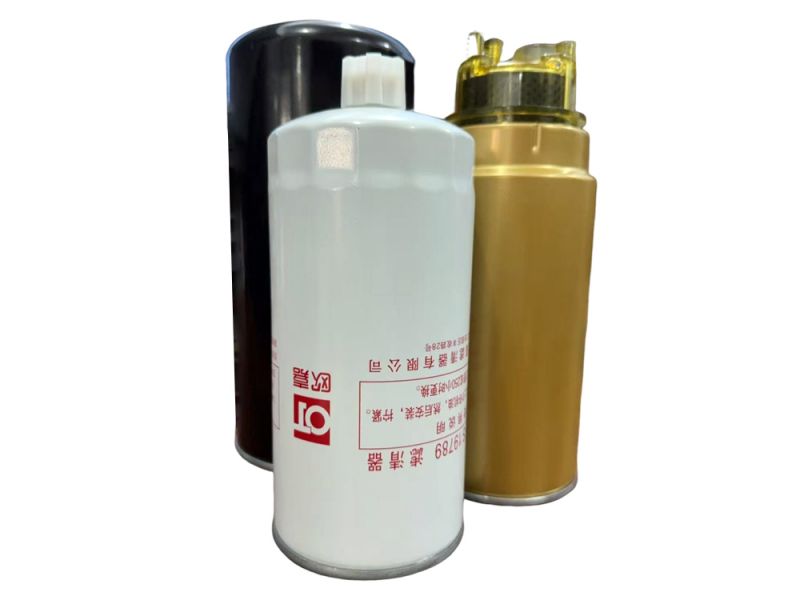
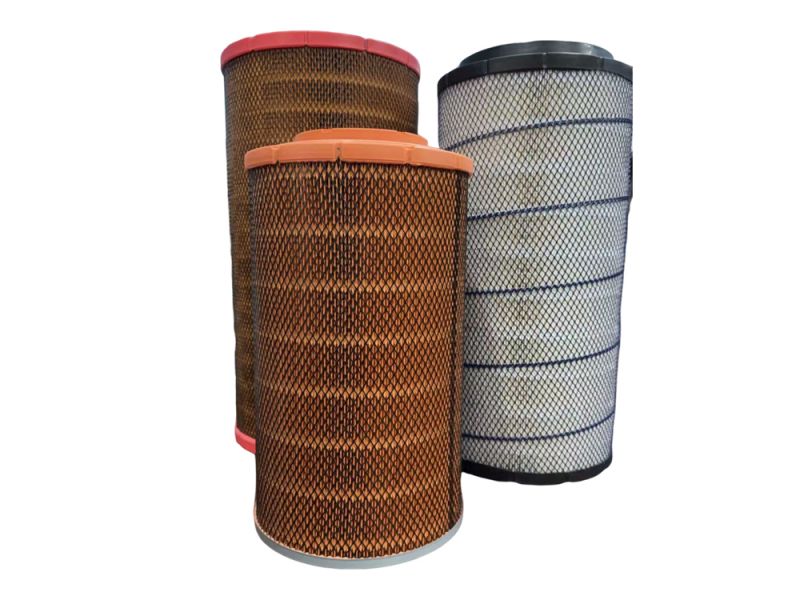
Opening the engine hood to check the oil filter was once a necessary skill for experienced drivers. But with the increasing number of green cars on the road, this scene is quietly disappearing - the electric motors of new energy vehicles do not require traditional oil filters, but they have thrown a new "test paper" for the filter industry in areas such as battery cooling systems, in car air purification, and three electric system protection.
Data shows that in 2024, the sales volume of new energy vehicles in China will exceed 12 million, with a penetration rate of 46%. This electrification revolution in the automotive industry is driving the filter from the "supporting role" of the engine to the "just needed component" of new energy vehicles, and accelerating the technology iteration and in-depth restructuring of the market pattern.
The 'unemployment crisis' of traditional filters and the opening of a new battlefield
In the era of fuel vehicles, the three major filters of oil, air, and fuel constitute the "protective iron triangle" of the engine, among which the oil filter occupies 40% of the automotive filter market share (data source: Filter Technology Network, June 2024). But the motor system of new energy vehicles adopts closed lubrication, and the oil change cycle is extended to more than 20000 kilometers, directly cutting the replacement frequency of traditional oil filters. According to after-sales data from a domestic new energy vehicle company, the average annual replacement of oil filters for its pure electric vehicle model is only one-third of that of fuel vehicles of the same level.
Behind the crisis lies the outbreak of new demands. The core pain point of new energy vehicles - battery thermal management, brings liquid filters to the center of the stage. The Kirin battery of CATL adopts a water-cooled cooling system, which requires high-precision coolant filters to filter metal debris and ion impurities, preventing pipeline blockage and battery short circuits. The filtration accuracy of this type of filter element is required to be below 5 microns (1/20 of the hair diameter), with a temperature resistance range covering -40 ℃ to 120 ℃, and the technical threshold far exceeds that of traditional oil filters. The market size of liquid filters for new energy vehicles is expected to reach 1.2 billion yuan in 2023, and is expected to exceed 3 billion yuan by 2025, with a compound annual growth rate of over 50% (data source: Shunqi Network, May 2025).
Three major technological breakthroughs: the "electrification deformation record" of filters
Traditional filters need to break through in the field of new energy. Material iteration is the way to break through, intelligence is the key to upgrading, and functional expansion is the key to opening the door to new demands. These three technological breakthroughs are like three powerful forces driving the transformation of filters from "mechanical parts" to "core functional components" in the wave of electrification. Each innovation is redefining the value boundary of this traditional component.
1. Material Revolution: From the "Filter Paper Era" to "Nanotechnology"
In the laboratory of a filter manufacturer in Shenzhen, nanofiber filter paper under a microscope is rewriting industry rules. This bionic material with a diameter of only 0.1 μ m is 30% thinner than the traditional wood pulp filter paper, but the filtration efficiency is increased from 95% to 99.9%, which can capture particles (about 0.12 μ m) the size of COVID-19. The NanoNet technology filter used by Cummins has a service life of up to 100000 kilometers in new energy commercial vehicles, which is twice that of traditional filters (data source: China Industry Research Network, 2025).
More importantly, the compact battery compartment space of new energy vehicles forces the filter element to evolve towards lightweight and integrated design. The air filter matched with BYD blade battery uses multi-layer composite filter materials to integrate PM2.5 filtration, formaldehyde adsorption, and virus disinfection and sterilization functions into a 15 cm square module. Its volume is 20% smaller than the traditional filter element, but its price is 40% higher (data source: Pacific Automobile Network, May 2025).
2. Intelligent transformation: Filter becomes a "talking sensor"
On the assembly line of Tesla's Shanghai Gigafactory, each Model Y air conditioning filter has a hidden "mystery": the built-in pressure sensor monitors the filter blockage in real time and sends replacement reminders to the car owner through the car networking system. The premium rate of this intelligent filter reaches 30%, and the market penetration rate has exceeded 20% by 2024. It is expected to increase to 65% by 2030 (data source: Shunqiwang, May 2025).
More cutting-edge applications have emerged in the field of commercial vehicles. The intelligent oil filter equipped on Foton Ouman's electric heavy-duty trucks (although the motor still requires a small amount of lubrication) can record data such as filter usage time and flow rate through a built-in chip. Combined with cloud based algorithms, it can accurately predict replacement cycles, transforming the traditional "5000 kilometer replacement" into "on-demand replacement", helping logistics companies reduce maintenance costs by 30% (data source: Filtration Technology Network, June 2024).
3. Cross functional: from "single filter" to "health guardian"
Ms. Li, a car owner in Shanghai, discovered that the newly purchased Xiaopeng G9 air conditioning filter is twice as thick as that of a gasoline car. After disassembling, it can be seen that in addition to the traditional activated carbon layer, a photocatalyst sterilization net and a PM0.3 grade ultrafine fiber layer have also been added. This "anti epidemic filter element" can filter 99.9% of COVID-19 aerosol, and the sales volume will surge by 200% in the autumn and winter flu season of 2023 (data source: Pacific Automobile Network, May 2025).
The enclosed cabin environment of new energy vehicles amplifies the demand for air purification inside the vehicle. Data shows that the frequency of using air conditioning in electric vehicles is 15% higher than that in gasoline vehicles, because the motor operates with low noise, making it easier for car owners to detect odors inside the car. In 2024, the market size of specialized air conditioning filters for new energy vehicles will reach 4.5 billion yuan, of which high-end products with formaldehyde decomposition and TVOC adsorption functions account for more than 60%, with an average price 80 yuan higher than ordinary filters (data source: Renren Wenku, May 2025).

Market reshuffle: opportunities for local enterprises to overtake on the curve
In the era of fuel vehicles, foreign brands such as Mannheim and Bosch monopolized 70% of the high-end supporting market. The price of an original engine oil filter exceeds 200 yuan, which is three times that of domestic alternatives (data source: Filter Technology Network, June 2024). But the technological transformation of new energy vehicles is breaking this pattern.
The filter industry cluster in Bengbu, Anhui has tasted the sweetness first. Local enterprises provide battery coolant filters for new forces such as NIO and Ideal, and solve the long-term corrosion problem of ethylene glycol solution through material modification technology. In 2024, related orders increased by 150%, and exports exceeded 500 million yuan. The Leopard King filter is an air conditioning filter element matched with the Wuling Hongguang MINI EV, which has entered the original factory supply chain with antibacterial and antiviral functions. The annual matching quantity of single vehicle models exceeds 500000 sets (data source: Shunqi Network, May 2025).
Foreign funded enterprises are also accelerating their transformation. Mahler has launched a new energy vehicle specific filter set, which includes battery cooling system filters, motor lubrication filters, and high-pressure component dust covers. The new energy supporting business in China will grow by 40% in 2024. But the cost-effectiveness advantage of local enterprises is obvious - for battery coolant filters with the same parameters, the domestic price is about 80 yuan, while foreign brands quote more than 200 yuan (data source: China Industry Research Network, 2025).
The future is here: the 'electrification blueprint' for the filter market in 2030
Looking back at the milestone of 2025, the transformation brought by new energy vehicles has just begun. Data shows that by 2030, the market share of air filters for new energy vehicles will increase to 45%, while the demand for traditional fuel vehicle filters will decrease by 30% (data source: Shunqi Network, May 2025). More noteworthy is the new opportunity brought by hydrogen fuel cell vehicles - their requirements for air filters are almost stringent, requiring 99.99% of ammonia and sulfides to be filtered to prevent fuel cell catalyst poisoning. The related technology is giving birth to a new billion dollar market.
In the face of this transformation, the "survival rules" of filter companies are being rewritten: a start-up company in Shenzhen has obtained strategic investment from BYD with graphene modified filter materials, a filter material company in Anping, Hebei is building intelligent production lines, and aftermarket brands in Wenzhou are starting to develop DIY replacement kits that are compatible with Tesla. When the automotive industry enters the era of "software defined cars", filters have evolved from mechanical components to a composite of "data+materials+functions", finding new value coordinates in the wave of electrification.
The evolution of filters, from the engine compartment to the battery pack, from regularly replaced consumables to intelligent networked sensors, is a microcosm of the electrification transformation of the automotive industry. When charging stations for new energy vehicles are scattered on the streets and filter cartridges begin to transmit data to factories through 5G, this seemingly traditional industry is ushering in its own "smart electrification" spring. For consumers, they may no longer have to worry about when to replace the filter element - but that small component hidden under the hood has already completed a magnificent transformation in the new energy revolution.